
Garden Bugs
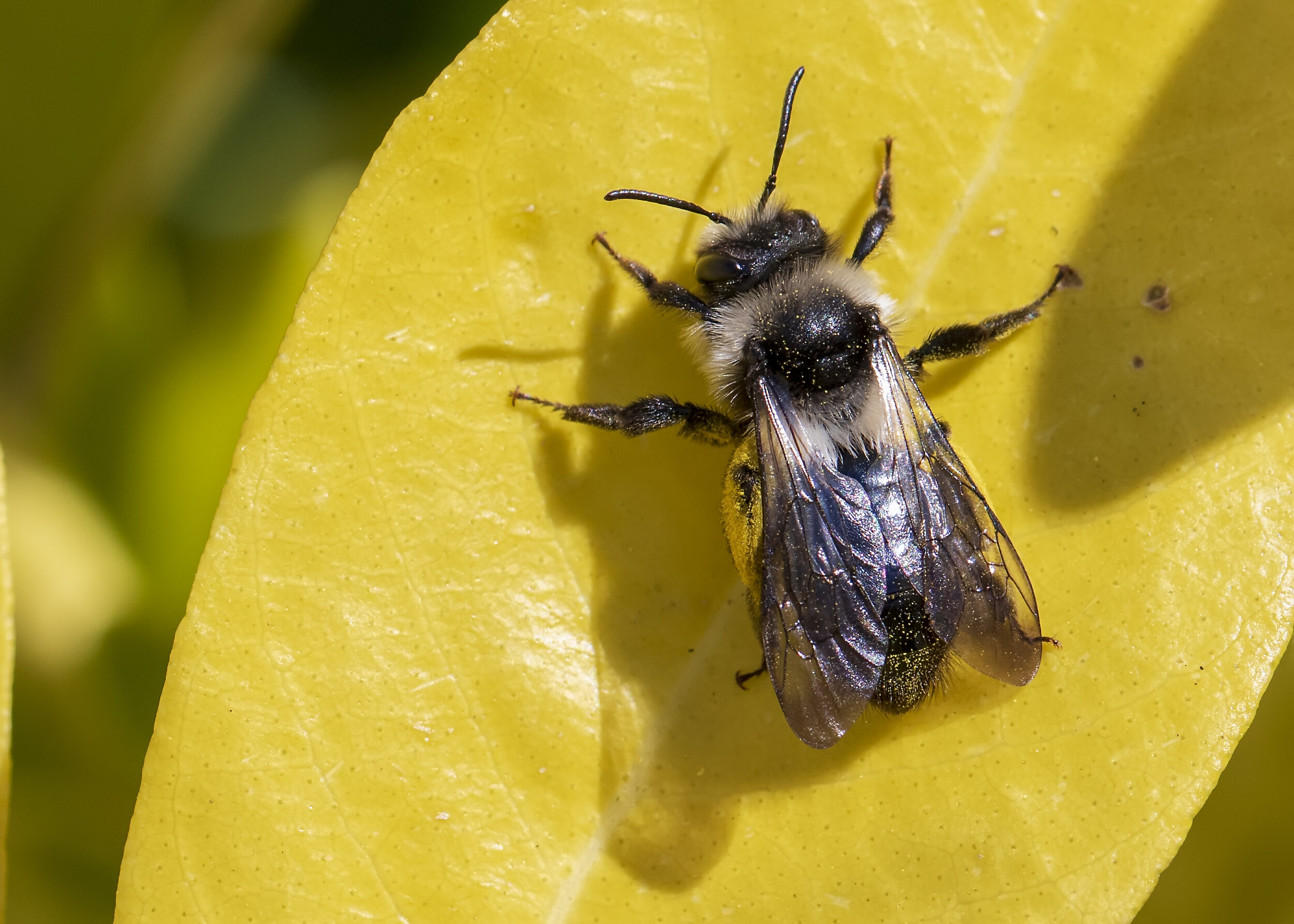
A few extra bee species added to the list, some of which can’t be fully ID’d without a microscope but I’m new species for me either way. Particularly happy with the Andrena Bicolor as I don’t believe I’ve ever seen this species before. I’ve started to record Hoverflies now also but it’s all getting a bit much! So many species to record, it’s almost like a full time Job if you really commit to it. It certainly keeps you occupied though if you’re struggling to find things to do during this lockdown period.



Garden Nocmig
Things are getting really interesting on the Garden Nocmig, so good that I’ve taken my organising to a whole new level. Below is a screenshot of my datasheet where I can log my records, but also give more information about weather conditions, gear used, and file name. I can also drop audio recordings onto the file so I can playback the recording right from the spreadsheet, which is really useful when revisiting files.
As you’ll see on the list, in the last two days I’ve had some really interesting birds! Just in the last two days alone I’ve had Curlew and a small movement of Arctic Terns. I’m sure in the first recording below there may be a few Common amongst them which you can hear at the very start of the recording but it is faint.
I’ve had plenty of mysteries during this recording process but by far the most intriguing for me is this bunting like call below. There are a few species with similar calls and I thought for a moment that it might be Little Bunting, but I’ve sent it to a few experienced birders, who are sure it’s not Little Bunting but are still unsure what it actually is. It may be something as simple as a Yellowhammer but as there’s only one call to go off, it becomes quite difficult to determine without some reference material. I’ve made the bunting file downloadable via Soundcloud, if you think you might know what it is, please let me know.
I’ve also added two other species since, in the form of a Kingfisher and Shelduck! At first, I logged the Shelduck as a Cormorant haha. After you’ve spent hours listening to nothing but air, your ears do play tricks on you after a while but it’s all a learning curve. It’s good to take time off and listen back with fresh ears. Big thanks to Chris at the Rare Bird Alert for letting me know about my mistake.
Taste of Freedom!
I’ve finally started back to work after what seemed like an age. For someone like myself who requires interacting with nature for the sake of my mental health, the release of being outdoors was quite emotional. I can’t stress enough the importance of being outdoors with nature, it really does make all the difference, so get out in the Garden as much as you can. Don’t suffer needlessly during this lockdown, take your daily walk come rain or shine.
For those that aren’t aware I’m self-employed, and everything I do outdoors is wildlife research, whether as a sub-contractor, my wildlife media business or for In Our Nature CIC as we’re working on nature content for people suffering from mental health. Whilst I’ve ensured I’ve worked from home as much as possible, a huge part of this work requires me being outdoors and so long as guidelines are followed I see no reason why this can’t continue. Below are a few species encountered during work, I hope you enjoy them!
One of my favourite species the Grasshopper Warbler. There’s just something about reeling or churring species that really ticks a box for me. They don’t have to look pretty at all so long as they sound interesting. Due to the right wind conditions in the last week or so, we’ve been getting a bit of a Grasshopper Warbler fall out, and that’s because they aren’t very good fliers despite having to migrant quite long distances, so wind conditions need to be in their favour but as a result they do end up blowing off course. This year due to the right conditions we should see a bumper year for them. I picked up 4 reeling males in the same location on the Gwent Levels.
Sedge Warbler and Reed Warbler have also turned up in good numbers.
Below are two types of Blackcap Song that’s worth noting if you haven’t already. The extended song is the one that’s often mistaken for Garden Warbler, as it’s drawn out and implements more of a linear pattern with less listening breaks. During this time a female entered it’s territory and he sang from low down in a bramble patch. Likely it’s preferred nesting location. Once the female had left its territory, he flew back to the top of a willow tree and sang the typical Blackcap song which is short and implements that typical fluty belt at the end of each phrase. Presumably this type of song carries further distances.
I’m starting to accumulate a nice collection of bird songs now, and if you’re interested to listen to more please follow this link where I’ve started to organise into collections.

